Restorative
medicine foundations

WHAT IS THE GOAL
OF RESTORATIVE MEDICINE?

Providing the body what it needs to

Restore function

Restore cells & tissues

Prevent and reverse cellular inflammation

Reduce feeling of discomfort
What is inflammation & is all inflammation bad?

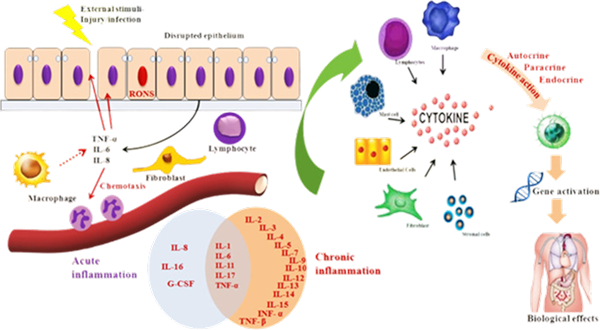
Cellular inflammation is a type of inflammation that occurs below the level of pain. It’s a vital defense mechanism that’s part of the immune system’s response to harmful stimuli, such as damaged cells, pathogens, toxic compounds, or irradiation. The purpose of inflammation is to remove harmful stimuli and start the healing process. Not all inflammation is “BAD”. Inflammation is required for transformation & to initiate the body’s healing process. If the immune system is not equipped (The adaptive immune system) to respond to reducing inflammation, chronic cellular dysfunction can occur.

Inflammation is always followed by recovery & restoration. If the balance of inflammation to recovery is off, this puts one at risk for chronic inflammation. Chronic inflammation is one of the root causes of chronic cellular dysfunction, which can manifest itself asInflammation is always followed by recovery & restoration. If the balance of inflammation to recovery is off, this puts one at risk for chronic inflammation. Chronic inflammation is one of the root causes of chronic cellular dysfunction, which can manifest itself as:

SUPPORTING PAPERS

Figure #1: The Cellular Inflammation Cascade & Biological Downstream Effects

Pain

Poor immune system recovery

Loss of tissue function or ability to recover

Weakness

Inability to focus

Organ-specific dysfunctions

Inability for cells to breakdown & absorb nutrients from food

Obesity

WHAT RESTORATIVE PROPERTIES ARE FOUND WITHIN UMBILICAL CORD TISSUE?

The restorative properties of the Umbilical Cord are found within the Wharton’s Jelly (WJ). The literature defines and supports Wharton’s Jelly to contain the following:

Extracellular matrix: This component makes up 95% of Wharton’s jelly by wet weight and includes collagen, glycoprotein, hyaluronic acid, sulfated glycosaminoglycan, and diffusible plasma proteins. Collagen I is the most common protein in Wharton’s jelly.

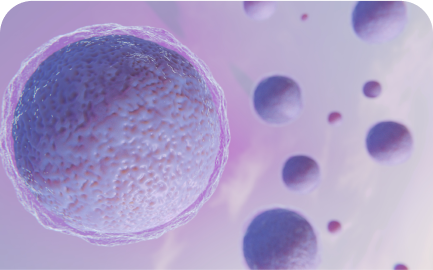
Mesenchymal stem cells: Wharton’s jelly has the highest concentration of mesenchymal stem cells per milliliter of any tissue with a rich extracellular matrix. These cells are immunoprivileged, non-tumorigenic, and can secrete factors that can help resolve inflammation and prepare injured areas for cell homing.

Growth factors, cytokines, and extracellular vesicles (exosomes): These substances may help reduce cellular inflammation and pain, and speed up the healing of musculoskeletal injuries

Supporting Literature:

How natural biologics from the umbilical
cord tissue are used in the clinical setting

Read through the research library below

SUPPORTING PAPERS

1.) Jessop, Z. M., Al-Sabah, A., Francis, W. R., & Whitaker, I. S. (2016). Transforming healthcare through regenerative medicine. BMC Medicine, 14(1), 115. https://doi.org/10.1186/s12916-016-0669-4

2.) Gupta, A., El-Amin, S. F., Levy, H. J., Sze-Tu, R., Ibim, S. E., & Maffulli, N. (2020). Umbilical cord-derived Wharton’s jelly for regenerative medicine applications. Journal of Orthopaedic Surgery and Research, 15(1), 49. https://doi.org/10.1186/s13018-020-1553-7

3.) Davies, J. E., Walker, J. T., & Keating, A. (2017). Concise Review: Wharton’s Jelly: The Rich, but Enigmatic, Source of Mesenchymal Stromal Cells. Stem Cells Translational Medicine, 6(7), 1620–1630. https://doi.org/10.1002/sctm.16-0492

4.) Exosomes from mesenchymal stem/stromal cells: A new therapeutic paradigm | Biomarker Research | Full Text. (n.d.). Retrieved June 12, 2024, from https://biomarkerres.biomedcentral.com/articles/10.1186/s40364-019-0159-x

5) A: Qazi, R. e M., Sajid, Z., Zhao, C., Hussain, I., Iftikhar, F., Jameel, M., Rehman, F. U., & Mian, A. A. (2023). Lyophilization Based Isolation of Exosomes. International Journal of Molecular Sciences, 24(13), 10477. https://doi.org/10.3390/ijms241310477

B: Golan, M. E., & Stice, S. L. (2024). Extracellular vesicle lyophilization for enhanced distribution to the point of care. Extracellular Vesicle, 3, 100041. https://doi.org/10.1016/j.vesic.2024.100041

6) (PDF) Food and Drug Administration’s Position on Commonly Injected Biologic Materials in Orthopaedic Surgery. (n.d.). Retrieved June 12, 2024, from https://www.researchgate.net/publication/350422334_Food_and_Drug_Administration’s

SUBMIT A QUESTION TO OUR
SCIENTIFIC & CLINICAL TEAM

Research
Opt-In
"
";s:14:"success_action";s:8:"redi

2. RESEARCH IN PAIN MANAGEMENT

1.) Timmons, R. B., Sugaya, K., & Bane, L. D. (2022). Homologous Use of Allogeneic Umbilical Cord Tissue to Reduce Knee Pain and Improve Knee Function. Life, 12(2), 260. https://doi.org/10.3390/life12020260

2.) Clinical Outcome of Achilles Tendon Repair Using Viable Intact Cryopreserved Umbilical Tissue Versus Standard of Case. (2017). Wounds, 29(11). https://www.hmpgloballearningnetwork.com/site/wounds/rapid-communication/clinical-outcome-achilles-tendon-repair-using-viable-intact

3.) Gupta, A., & Aratikatla, A. (2023). Allogenic Umbilical Cord Tissue as a Scaffold for Ankle Osteoarthritis. Cureus, 15. https://doi.org/10.7759/cureus.46572

4.) Han, Q., Wang, S., Chen, D., Gan, D., & Wang, T. (2022). Exosomes derived from human umbilical cord mesenchymal stem cells reduce tendon injuries via the miR-27b-3p/ARHGAP5/RhoA signaling pathway. Acta Biochimica et Biophysica Sinica, 54(2), 232–242. https://doi.org/10.3724/abbs.2021026

5.) Clinical Outcome of Achilles Tendon Repair Using Viable Intact Cryopreserved Umbilical Tissue Versus Standard of Case. (2017). Wounds, 29(11). https://www.hmpgloballearningnetwork.com/site/wounds/rapid-communication/clinical-outcome-achilles-tendon-repair-using-viable-intact

6.) Gupta, A., & Khanna, M. (2023). Mesenchymal Stem/Stromal Cells for Treatment of Rheumatoid Arthritis. IP International Journal of Orthopaedic Rheumatology, 8, 47–53. https://doi.org/10.18231/j.ijor.2022.012

3. Research in Facial & Hair Aesthetics

1.) (PDF) Food and Drug Administration’s Position on Commonly Injected Biologic Materials in Orthopaedic Surgery. (n.d.). Retrieved June 12, 2024, from https://www.researchgate.net/publication/350422334_Food_and_Drug_Administration’s

2.) Clinical Outcome of Achilles Tendon Repair Using Viable Intact Cryopreserved Umbilical Tissue Versus Standard of Case. (2017). Wounds, 29(11). https://www.hmpgloballearningnetwork.com/site/wounds/rapid-communication/clinical-outcome-achilles-tendon-repair-using-viable-intact

3.) Gupta, A., & Aratikatla, A. (2023). Allogenic Umbilical Cord Tissue as a Scaffold for Ankle Osteoarthritis. Cureus, 15. https://doi.org/10.7759/cureus.46572

4.) Han, Q., Wang, S., Chen, D., Gan, D., & Wang, T. (2022). Exosomes derived from human umbilical cord mesenchymal stem cells reduce tendon injuries via the miR-27b-3p/ARHGAP5/RhoA signaling pathway. Acta Biochimica et Biophysica Sinica, 54(2), 232–242. https://doi.org/10.3724/abbs.2021026

5.) Clinical Outcome of Achilles Tendon Repair Using Viable Intact Cryopreserved Umbilical Tissue Versus Standard of Case. (2017). Wounds, 29(11). https://www.hmpgloballearningnetwork.com/site/wounds/rapid-communication/clinical-outcome-achilles-tendon-repair-using-viable-intact

6.) Gupta, A., & Khanna, M. (2023). Mesenchymal Stem/Stromal Cells for Treatment of Rheumatoid Arthritis. IP International Journal of Orthopaedic Rheumatology, 8, 47–53. https://doi.org/10.18231/j.ijor.2022.012

7.) Gupta, A., Rodriguez, H. C., Potty, A. G., Levy, H. J., & El-Amin III, S. F. (2021). Treatment of Knee Osteoarthritis with Intraarticular Umbilical Cord-Derived Wharton’s Jelly: A Case Report. Pharmaceuticals, 14(9), 883. https://doi.org/10.3390/ph14090883

Umbilical cord tissue in skin and hair restoration (Research- review)

Umbilical cord tissue in skin restoration: the cellular mechanism explained

Umbilical cord exosomes improve skin aesthetic in 30 days in 40 patients (Clinical- longitudinal study)

Wharton’s Jelly stem cells regrow hair by 67% in 4 alopecia patients (Clinical- case study)

4. RESEARCH IN DENTAL & CRANIOFACIAL PAIN

SUPPORTING PAPERS

1.) Aratikatla, A., Ghandour, S., Maffulli, N., Gupta, M., & Gupta, A. (2023). Allogenic umbilical cord tissue for temporomandibular joint injuries. Frontiers in Pain Research, 4. https://doi.org/10.3389/fpain.2023.1281277

2.) Ren, K., Vickers, R., Murillo, J., & Ruparel, N. B. (2023). Revolutionizing orofacial pain management: The promising potential of stem cell therapy. Frontiers in Pain Research, 4, 1239633. https://doi.org/10.3389/fpain.2023.1239633

Umbilical cord tissue in treating TMJ disorder (Clinical- Systematic Review)

Umbilical cord tissue in chronic neuropathic craniofacial pain (review)

5. Research In Disease Prevention & Anti-Aging

Read through the research library below

SUPPORTING PAPERS

1.) Garay, R. P. (2023). Recent clinical trials with stem cells to slow or reverse normal aging processes. Frontiers in Aging, 4, 1148926. https://doi.org/10.3389/fragi.2023.1148926

2.) Perez, J. A., Parcero Valdes, J. J., Corral Moreno, R., Gomez Cuevas, L. I., Lopez, J. J., Ichim, T., McGreevy, K., Lin, F., Kesari, S., & Datta, S. (2023). Intravenous Administration of Umbilical Cord-Derived Mesenchymal Stem Cells (UC-MSC) for Acute Respiratory Distress Syndrome Due to COVID-19 Infection. Cureus, 15(8), e44110. https://doi.org/10.7759/cureus.44110

Umbilical cord tissue mesenchymal stem cells slow or reverse the normal aging process (Clinical trials – systematic review)

Intravenous administration of 100 million mesenchymal stem cells reduce inflammation from COVID- 19 (Clinical peer reviewed publication)

Scroll to Top